Last week, sixth-grade students participated in a series of environmental science stations that challenged them to apply computational thinking and design thinking to real-world problems. From comparing the pH of different drinking water samples to measuring turbidity (the cloudiness of water), students used decomposition to break water samples into measurable components and pattern recognition to identify trends within their data.
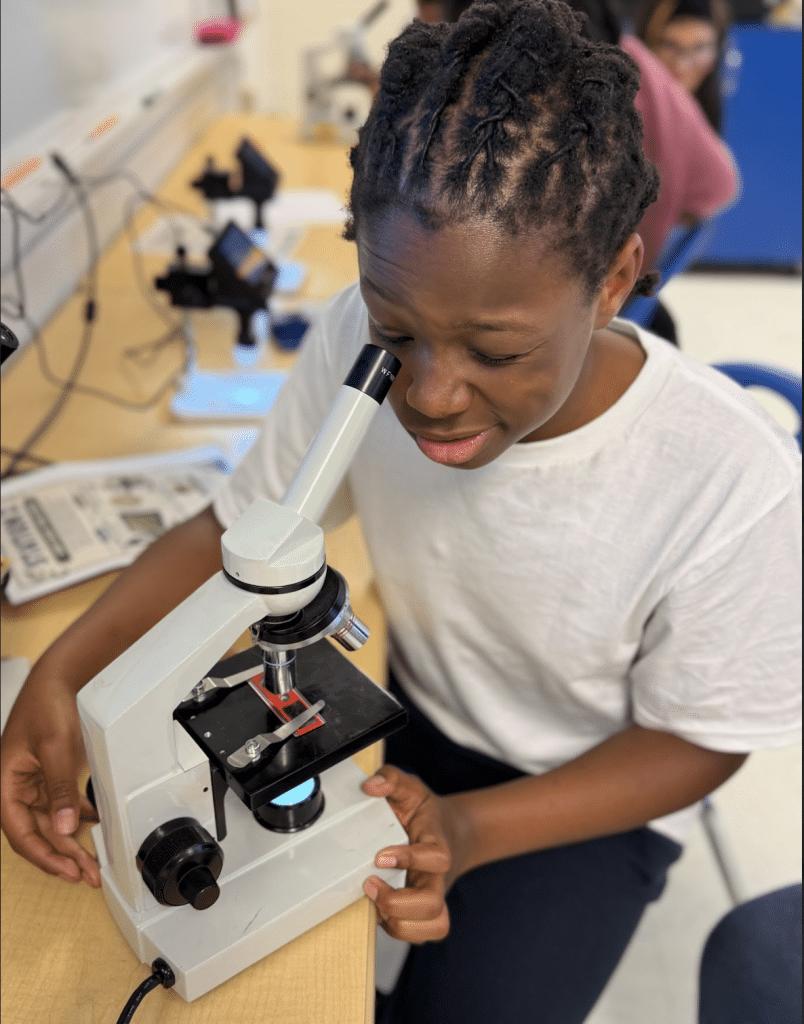
Students explored the power of abstraction by examining plant specimens with both traditional and digital microscopes, following a step-by-step process to focus on the details that mattered most while comparing different methods of observation. Students were also presented with an oil spill scenario and tasked with using the design thinking process to empathize, define the problem, ideate potential solutions, and test their designs using limited materials.
Through these hands-on investigations, students discovered how computational thinking can be applied across a variety of environmental challenges while building workforce-ready skills such as critical thinking, data analysis, problem-solving, and collaboration that are applicable across a wide range of careers!
SmithTech is a College Partnership Laboratory School led by Old Dominion University with Chesapeake Public Schools that provides students with opportunities to apply computational thinking and design thinking to real-world challenges while building critical problem-solving, collaboration, and data analysis skills.
Thank you to our ODU graduate assistants, Mabel Annobil and Stephen Croffie whose support and guidance helped bring these hands-on experiences to life.