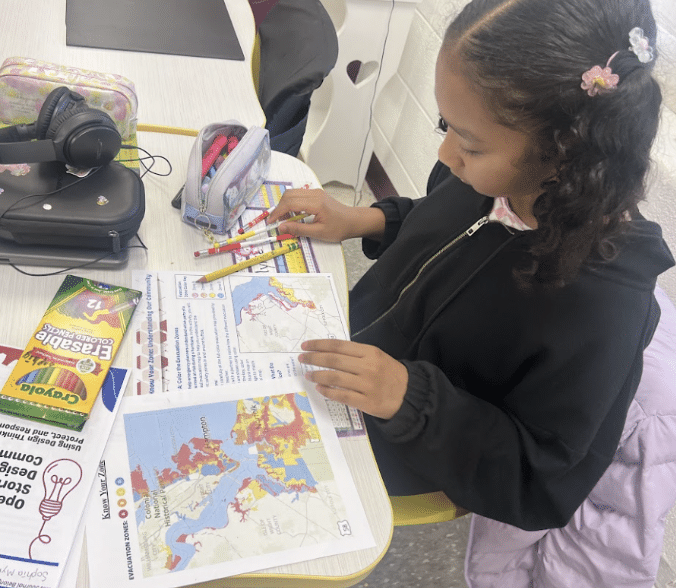
This week, fifth grade students at the STEM Academy returned from winter break by recentering and refocusing on their semester-long Signature Project, Operation StormWatch. The project challenges students to think deeply about how communities prepare for severe weather, respond during emergencies, and work together to keep people safe.
Operation StormWatch places students in authentic roles as emergency planners, weather experts, and community leaders. The challenges they explore are grounded in real-world scenarios, and the decisions they practice mirror those faced by local officials during hurricanes, floods, and other severe weather events.
In March, students will bring their learning to life during a visit to the Suffolk Emergency Operations Center, where they will participate in a mock hurricane scenario. During this immersive experience, students will take on emergency response roles and make decisions designed to help protect the citizens of Suffolk.
Knowing Our Zone and Planning for Safety
This week’s instruction centered on an essential question: How does knowing your location help keep you safe during a hurricane?

Students engaged in a “Know Your Zone” design thinking activity that connected emergency planning to place-based learning. Using blank maps of the local community, students identified and colored official evacuation zones using Suffolk’s established color system. Through this process, students analyzed which areas are closest to the water, which are farther inland, and why some zones must evacuate earlier than others.
As they worked, students were encouraged to think like emergency planners, discussing how flooding risk increases in certain areas and how early decisions can impact community safety.
Places That Matter
Students then extended their thinking through a “Places That Matter to Me” activity. Using stickers, they marked their school, their home, and other locations they regularly visit within the community. By identifying which evacuation zones these places fall into, students discovered that not everyone receives the same instructions during a hurricane.

This activity sparked meaningful discussions about why emergency messaging must differ based on location and risk, and how clear communication is critical during a crisis.
Mapping Evacuation Routes
To close the lesson, students examined regional evacuation route maps and highlighted the routes their families might take during an emergency. This exercise helped students visualize how communities move away from danger and reinforced the importance of planning well before a storm arrives.
Learning From Community Experts
This work intentionally built on learning students experienced earlier in the semester with Richard Stephens, Suffolk’s Emergency Management Coordinator. Prior to winter break, Mr. Stephens shared how the city prepares for severe weather and coordinates response efforts across departments. By revisiting this knowledge and applying it through hands-on mapping and planning activities, students deepened their understanding of how emergency management decisions are made and why they matter.
As Operation StormWatch continues, students will keep layering their learning and preparing to step confidently into leadership roles during their upcoming Emergency Operations Center simulation.
Stay tuned for future Forecast Friday updates as STEM Academy students continue designing solutions for community safety.