Fifty students across 14 mission teams took center stage at the Aerospace Academy of the Eastern Shore’s (AAES) inaugural 9th Grade Exhibition of Learning, presenting the results of months of research, engineering design, and scientific investigation through the Sounding Rocket Mission Prototype Design Challenge.
The challenge immersed students in an authentic aerospace experience that mirrored the work of real-world scientists and engineers. Throughout the year, students learned to think like mission teams, developing research-driven sounding rocket missions designed to answer scientific questions about Earth’s atmosphere and space environment.
The exhibition marked the culmination of a year of learning in computer science, engineering, design thinking, research, and professional communication as students prepare for future opportunities in aerospace and other STEM fields.
Learning Through Authentic Aerospace Engineering
What made the Sounding Rocket Mission Prototype Design Challenge unique was its intentional integration of authentic aerospace engineering practices with scientific investigation, two disciplines that are often difficult to combine at the ninth-grade level.
Students began by researching past NASA missions and studying the payload instruments used by scientists and engineers to collect data during flight. Teams then developed mission concepts centered around specific scientific objectives and research questions.
As their missions evolved, students assumed team-based engineering roles and responsibilities while working collaboratively to address mission requirements and constraints. Each team designed a custom mission patch, developed stakeholder-facing mission proposals, and explored payload and rocket redesign concepts to improve mission performance.
Students also created physical rocket prototypes using a variety of methods, including 3D printing and paper modeling, allowing them to test and refine their ideas through an iterative engineering process.
Scientific Investigation at the Core
Scientific inquiry remained at the center of every mission.
Teams developed research questions, identified mission objectives, selected instrumentation, and created plans for collecting atmospheric and environmental data. Students considered factors such as payload capacity, mission constraints, and data collection requirements while making evidence-based decisions throughout the design process.
The resulting missions explored a variety of scientific topics, including atmospheric pressure, weather conditions, solar radiation, plasma density, and other environmental phenomena.
By combining engineering design with scientific investigation, students gained firsthand experience with the interdisciplinary nature of aerospace missions.
Defending Their Missions
During the Exhibition of Learning, each team presented its mission to visitors, educators, family members, and community stakeholders.
Students explained their scientific objectives, engineering decisions, payload selections, and mission constraints while discussing the potential impact of their proposed research. Audience members engaged students in conversations about mission design, data collection methods, and the challenges of balancing scientific goals with engineering limitations.
The presentations highlighted students’ growth as communicators, collaborators, and problem-solvers while demonstrating the technical knowledge they had developed throughout the project.
More importantly, the exhibition showcased the skills that are essential to the future aerospace workforce, including teamwork, innovation, technical communication, critical thinking, and evidence-based decision-making.
Student Mission Team Highlights
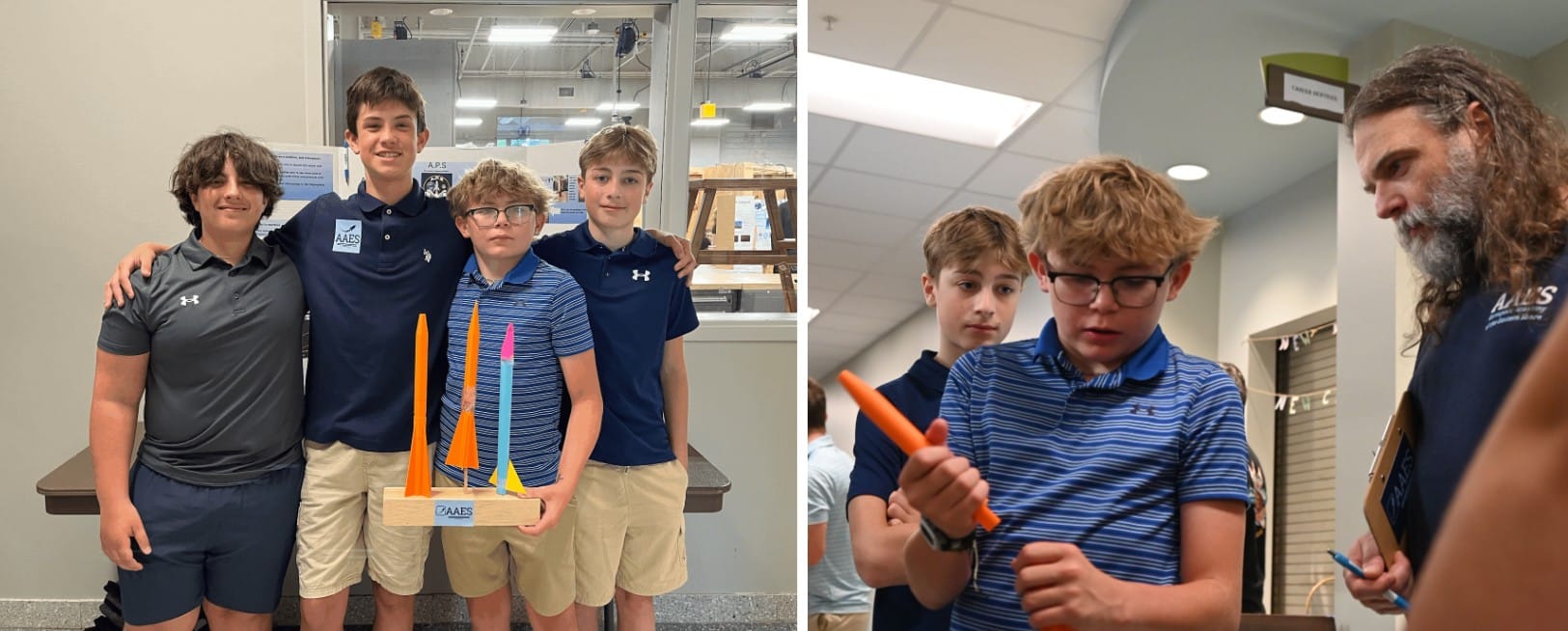
A.P.S. (Atmospheric Pressure Studies) – Lucas, Caleb, William, Owen
The A.P.S. mission redesigned the rocket with four-fin configurations and a slightly larger base section. 3D-printed parts were incorporated to strengthen the structure and support the payload. These improvements were intended to increase stability, allowing the rocket to carry additional weight, and improve overall flight reliability. The redesigned rocket will provide a better platform for collecting atmospheric data focused on wind velocity using a barometer and anemometer.
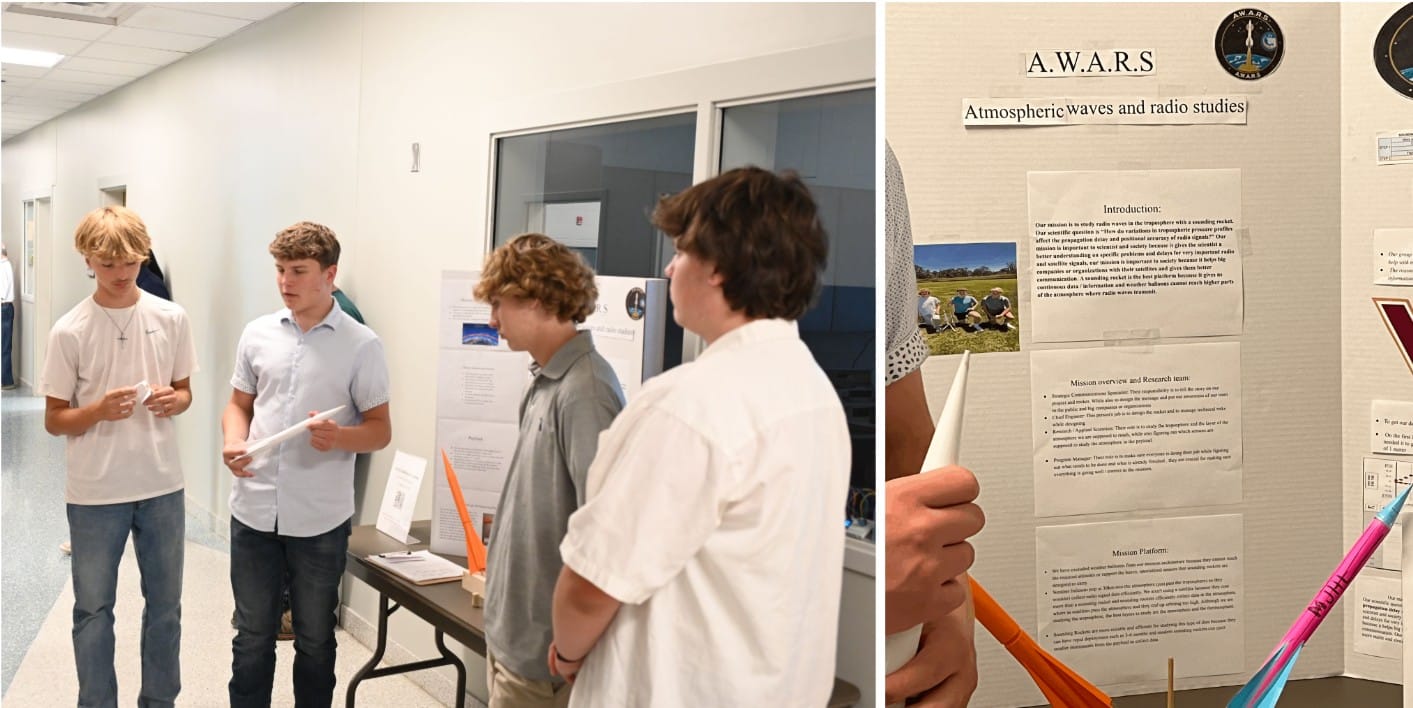
A.W.A.R.S. (Atmospheric Waves and Radio Studies) – Clayton, Cain, Cole, Ryan
The A.W.A.R.S. mission incorporated 3d-printed components, stronger materials, and improved fin designs to increase durability and stability. Our scientific objective focused on variations in tropospheric pressure profiles affects the propagation delay and positional accuracy of radio signals.
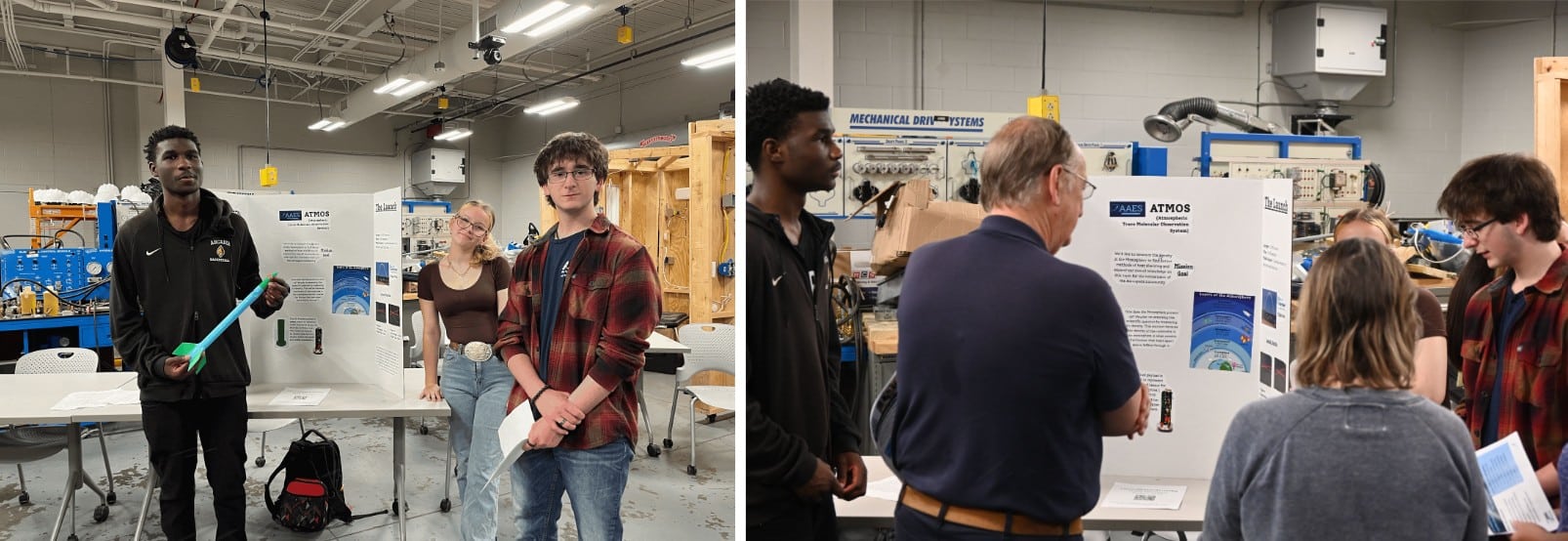
ATMOS (Atmospheric Trace Molecular Observation System) – Addison, Caleb, Jahmize, Jafet
ATMOS will collect data about conditions in the mesosphere. The team will analyze the results to determine how atmospheric density helps protect Earth from incoming meteors and space debris. These findings could support future advances in spacecraft design and atmospheric science.
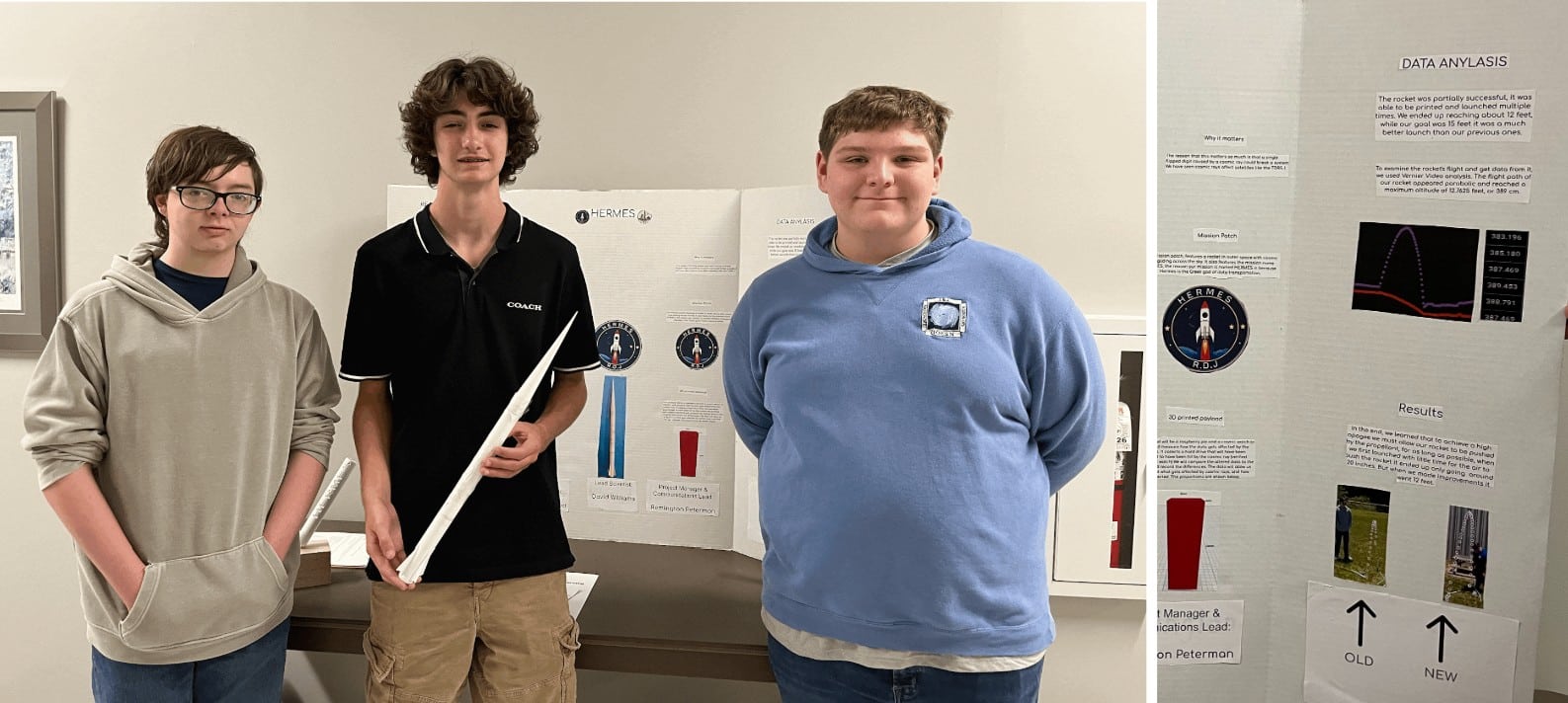
HERMES (Jackson, Remi, David)
The HERMES mission is based on their original prototype, with several design improvements to increase stability and performance.The team explored methods to make launch pressure more consistent, helping the rocket reach more predictable heights. The team examined the rocket’s flight with Vernier Video analysis, where they found that their rocket reached a maximum altitude of 389 centimeters.
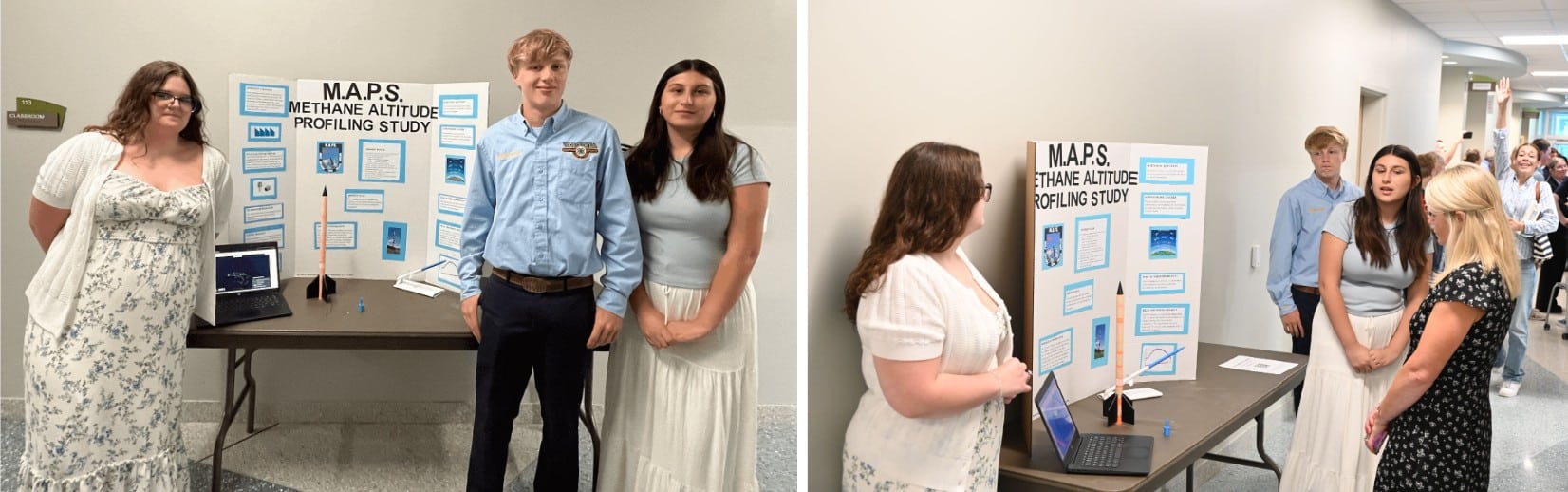
M.A.P.S. (Methane Altitude Profiling Study) – Kelly, Ella, Connor
The M.A.P.S mission included a rocket with a durable 3D-printed nose cone, lightweight fins, and a forward-shifted center of mass for increased stability. The final design was based on a scaled version of the Black Brant VII sounding rocket. Their scientific objective focused on methane concentration change between ground level and higher altitudes in the lower atmosphere.
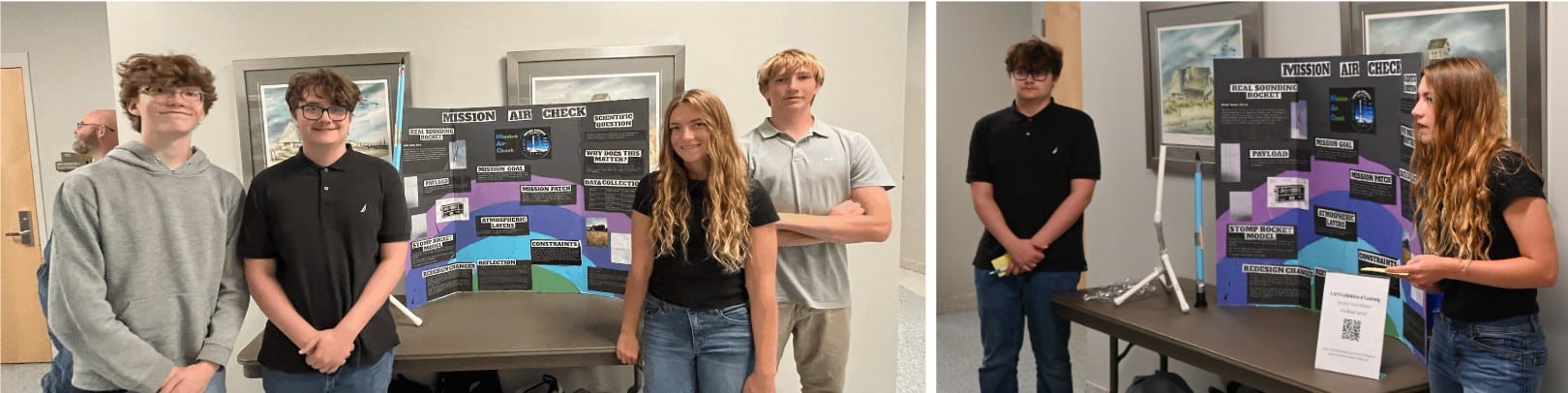
M.A.C. (Mission Air Check) – Zamory, Zachary, Ellis, Carter, Amelie
The team focused on designing, building, and launching a sounding rocket using a PVS launcher system. The team tested different rocket designs and analyzed their effects on flight height, stability, and duration. Data on altitude, flight time, and overall performance was collected throughout each launch using tracking tools and observations. The goal was to create a rocket that flies accurately, reach high altitudes, and remain in flight for as long as possible. The results will help improve future rocket designs and provide valuable engineering experiences.
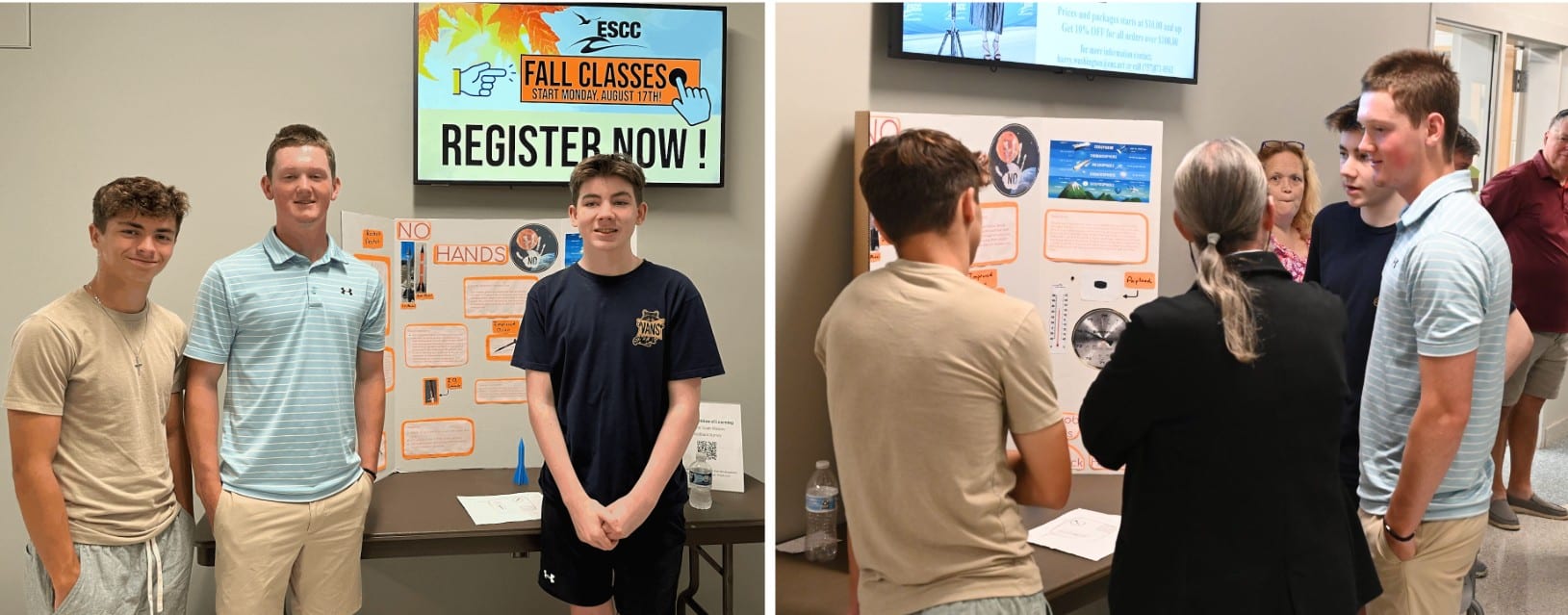
No Hands (Alex, Jacob, Caiden) – The No Hands team developed a sounding rocket inspired by the improved Orion rocket design, focusing on increasing stability, durability, and aerodynamic performance. After identifying weaknesses in their original paper-based prototype, the team redesigned the rocket with 3D-printed fins and a streamlined nose cone to better withstand launch conditions. Their mission included a payload equipped with instruments representing a density tracker, thermometer, and barometer to support atmospheric data collection.
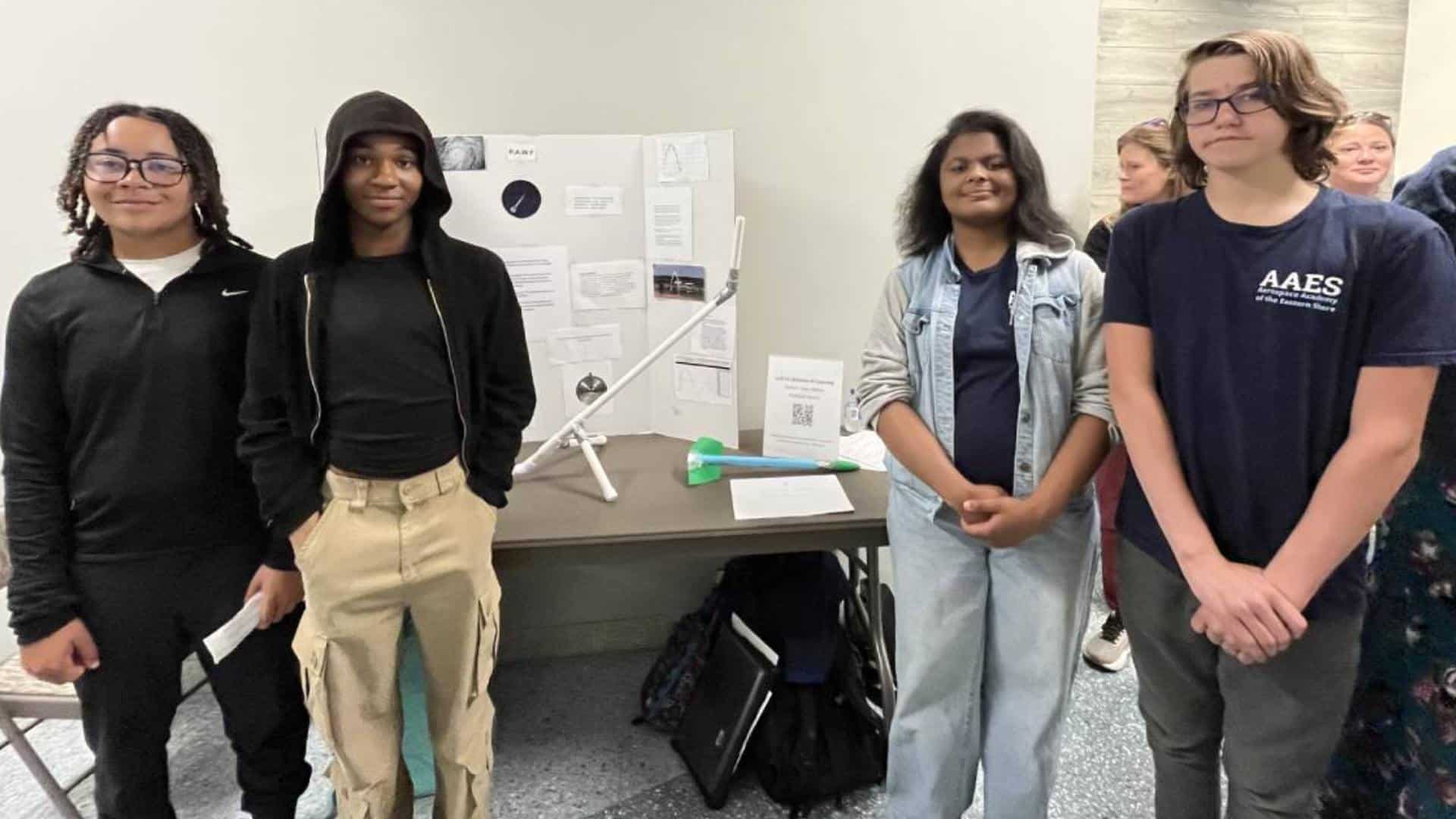
P.A.W.F. (Pressure Analysis Weather Flight) – Amira, Kinsley, Eric, and Zyneir
The P.A.W.F. team focused on investigating atmospheric pressure and weather conditions. By analyzing how pressure changes at different altitudes, the team explored how atmospheric data can help scientists better understand weather systems and their impacts on communities. Their mission highlighted the importance of atmospheric research in studying and predicting weather patterns.
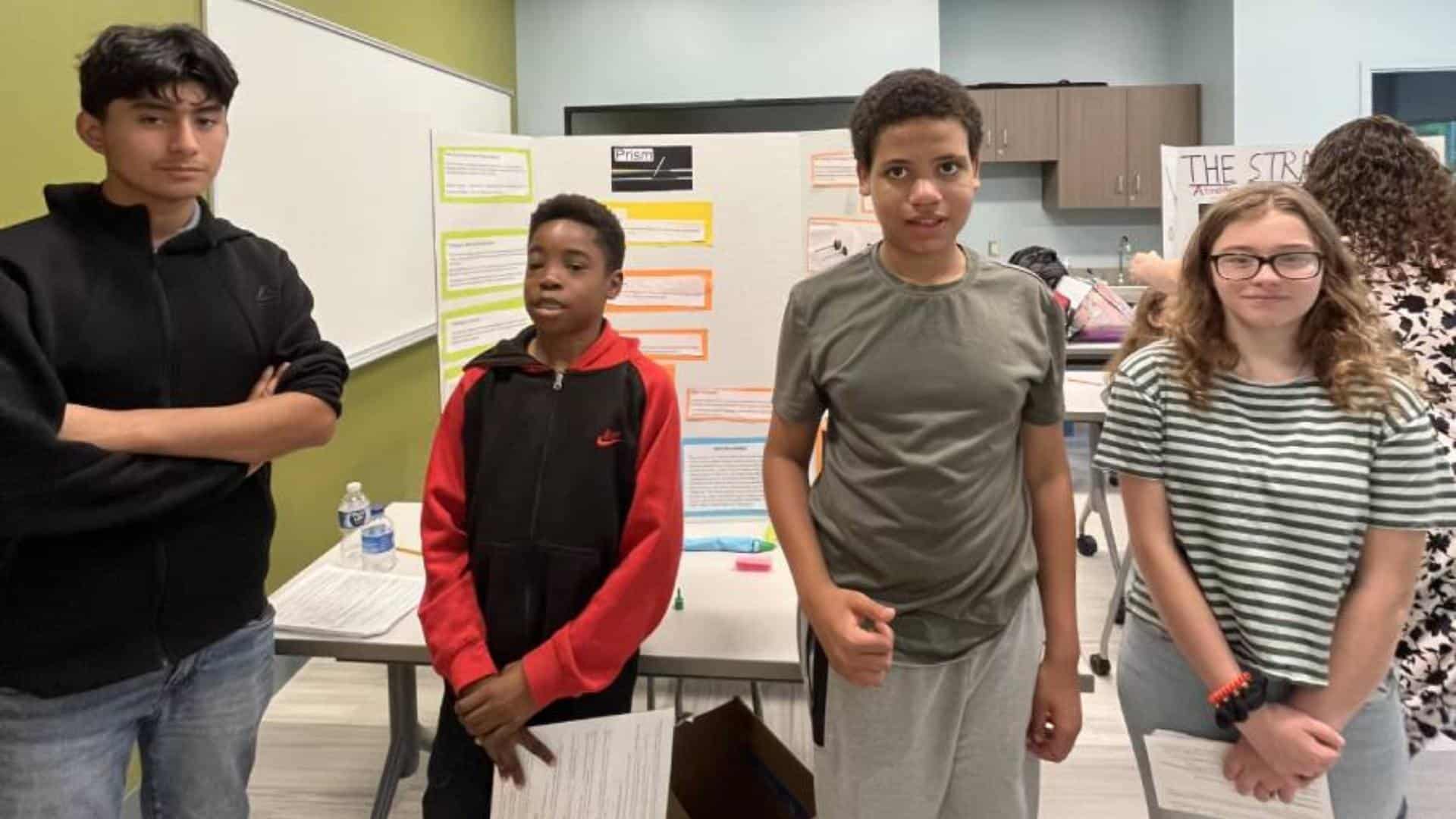
PRISM (Plasma Research in Suborbital Missions) – Kayler, Edison, Brayden, Rilynn
The PRISM mission is to collect data on plasma density in the ionosphere. Their rocket will carry instruments designed to measure the concentration of electrons and ions as it travels through this region of the atmosphere. Data will be collected at different altitudes to identify areas where plasma density changes significantly. The information gathered will help better understand space weather and its impact on communication systems.
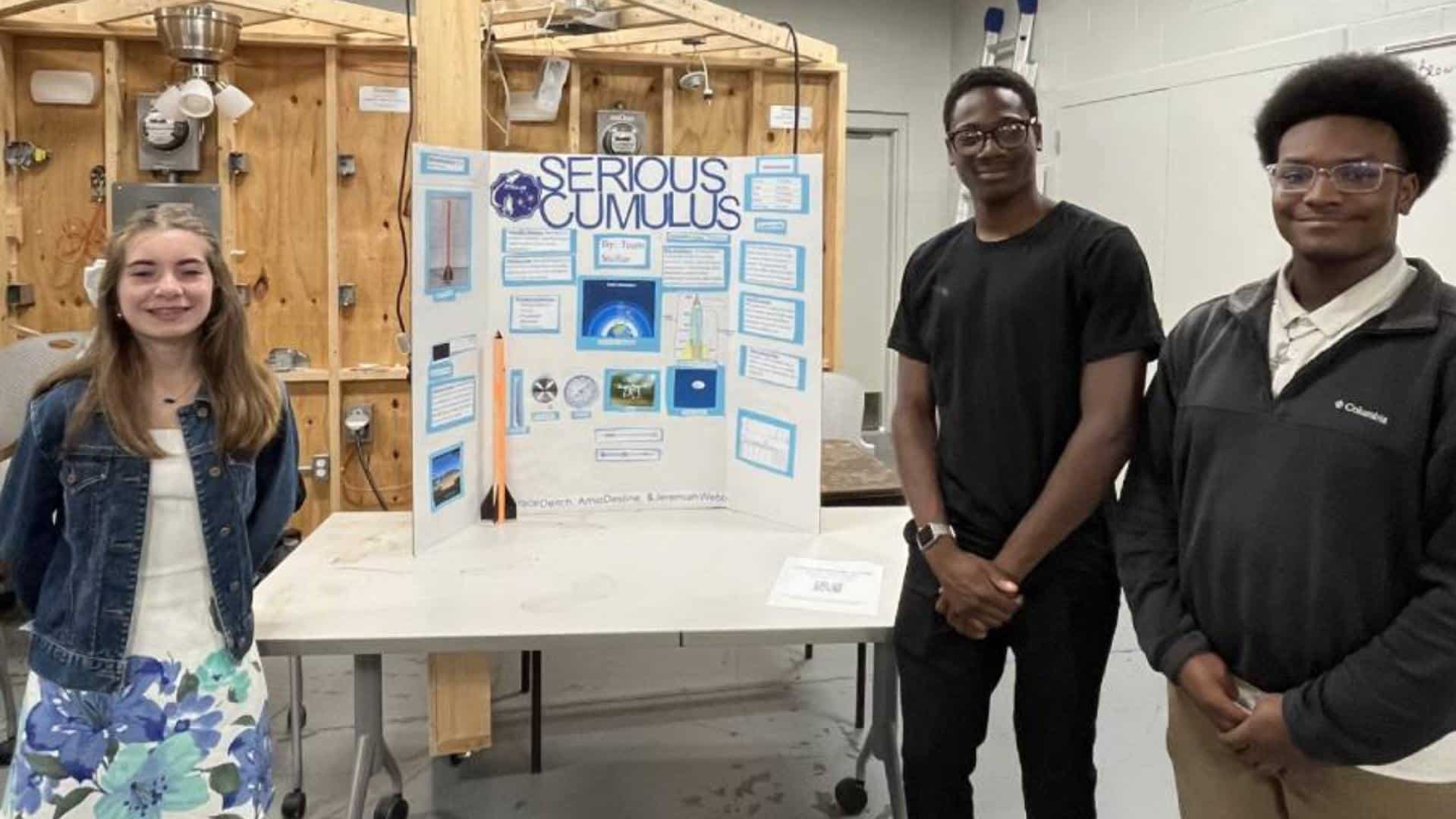
Serious Cumulus – Grace, Amio, Jeremiah
The Serious Cumulus mission is based on a sounding rocket design that studies atmospheric conditions. The goal was to uncover how temperature, humidity, and air pressure cause clouds to move in the troposphere since cloud movement is vital for aviation, agriculture, energy, and emergency management. Understanding these atmospheric systems can help professionals anticipate bad weather and improve early warning accuracy.
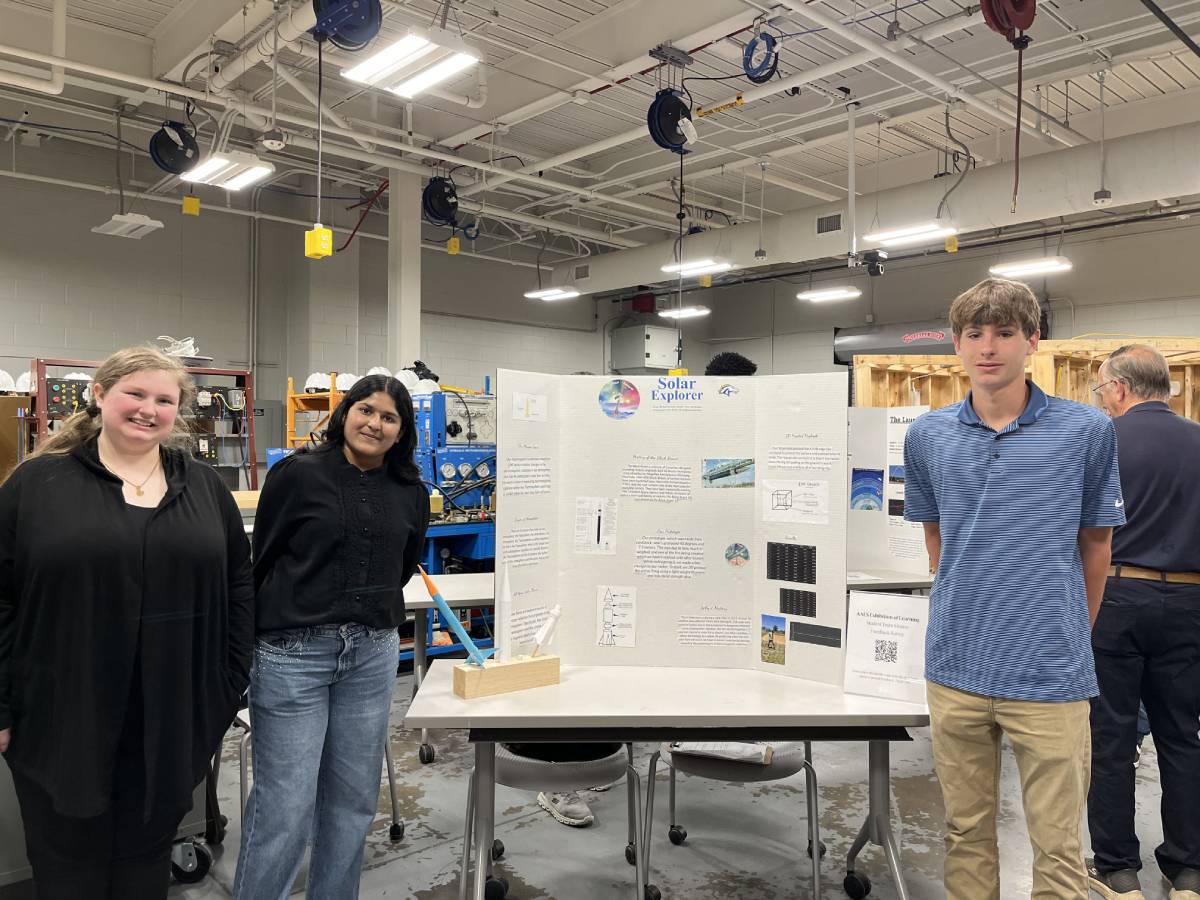
Solar Explorer – Kavya, Fiona, Karter
The Solar Explorer mission focuses on predicting solar flares before they occur. Because these powerful bursts of electromagnetic radiation can interfere with satellite operations and communication systems, the team explored how monitoring solar activity could help identify warning signs and improve preparedness for future solar events.
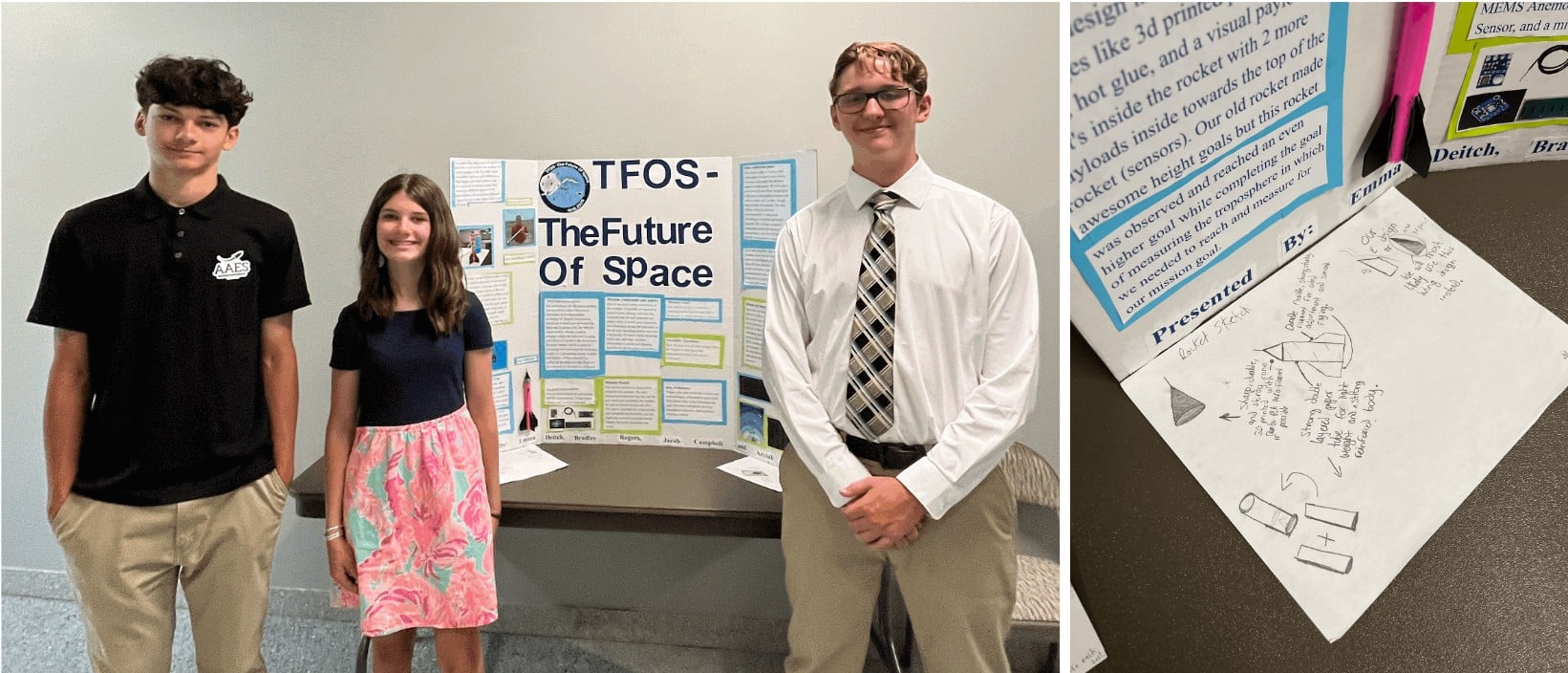
TFOS (The Future of Space) – Emma, Bradley Jacob, Aziyah
The TFOS mission is to answer the scientific question “How do pressure systems change from the bottom to top of the troposphere before and after a hurricane”. By collecting pressure change data before and after a hurricane, the team wants to bridge the gap between immediate survival, atmospheric physics, and localized tracking models.
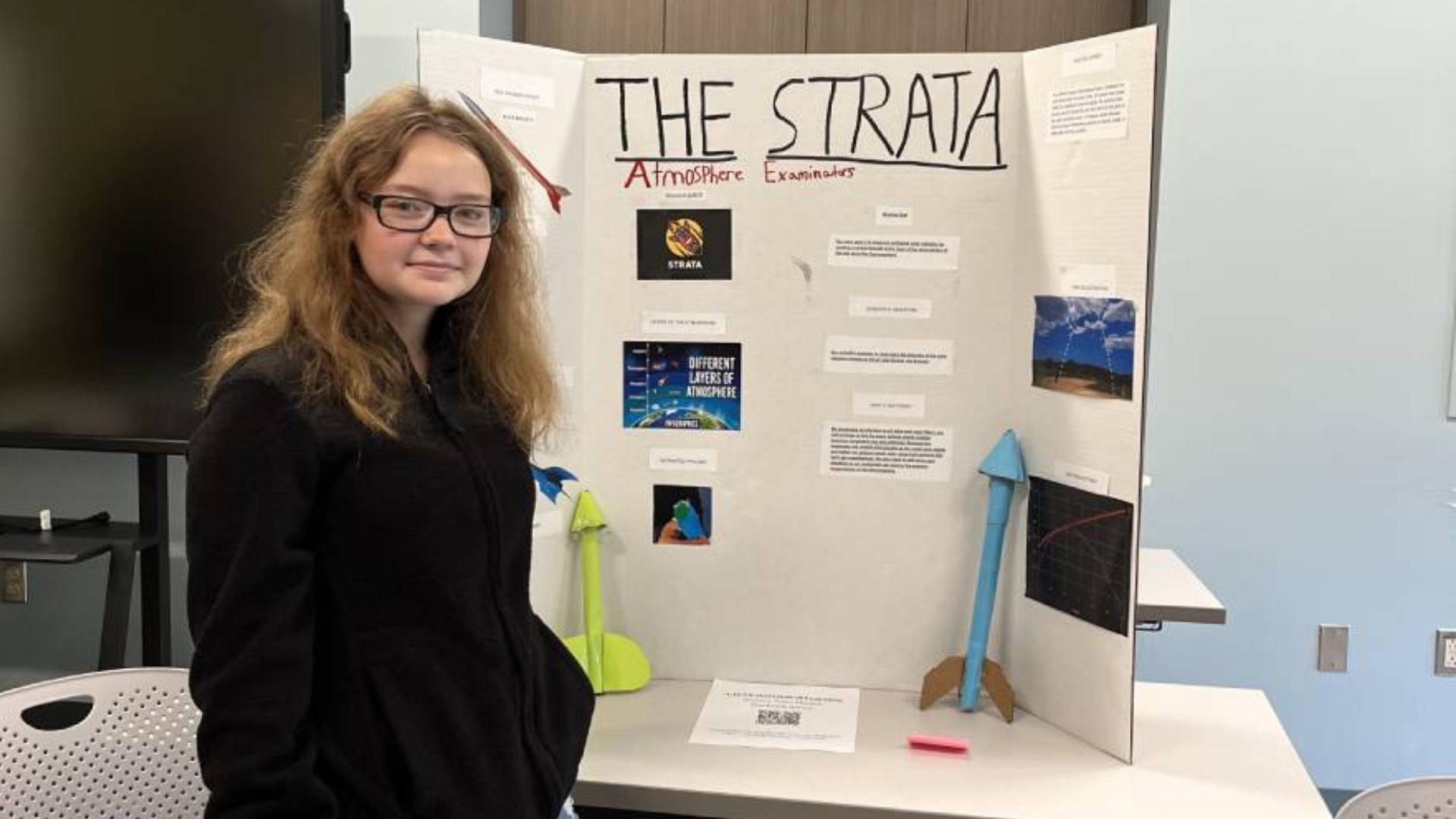
THE STRATA – Kaylee (Danny, Messi)
The STRATA mission measured solar radiation at different altitudes throughout the atmosphere. The team analyzed the results to better understand the relationship between altitude and solar radiation exposure. This information can help improve technologies that rely on solar energy and environmental monitoring.
About the Aerospace Academy of the Eastern Shore
The Aerospace Academy of the Eastern Shore (AAES) represents an innovative collaboration among Accomack County Public Schools, Northampton County Public Schools, Eastern Shore Community College, and Old Dominion University.
Through this partnership, AAES provides high school and dual-enrollment coursework as part of the Eastern Shore Lab School. Courses are delivered through a blend of synchronous and asynchronous virtual learning, enabling students across the Eastern Shore to participate while remaining enrolled in their home schools.
Special Thank You
Thank you to Accomack County Public Schools (ACPS), Northampton County Public Schools (NCPS), AAES Director (Dr. Rachel White), AAES STEM Specialist (Joy Philips), AAESS Lab Teachers (Frederick Gers, Chris Matthews, Tim Smith, Nic Diaz, Lynne Tierney, and Rodolfo Clarke), ODU College of Engineering (Dr. Orlando Ayala and Dr. Issac Kumi), NASA Wallops Flight Facility (Sounding Rocket Division, David Pierce, Giovanni Rosanova, Cathy Hesh, and Victoria Stoffel), Eastern Shore Community College (President Dr. Daryl Minus, Vice President Dr. Ramzi Ockaili, Scott Hall, and Bill LeCato for pictures), Virginia Spaceport Authority (Sean Mulligan and Sidnee McGee), STELLA (NASA Goddard, Mike Taylor), and Virginia Space Grant Consortium (VSGC) for your support and partnership so that our students can become future innovators of tomorrow!